
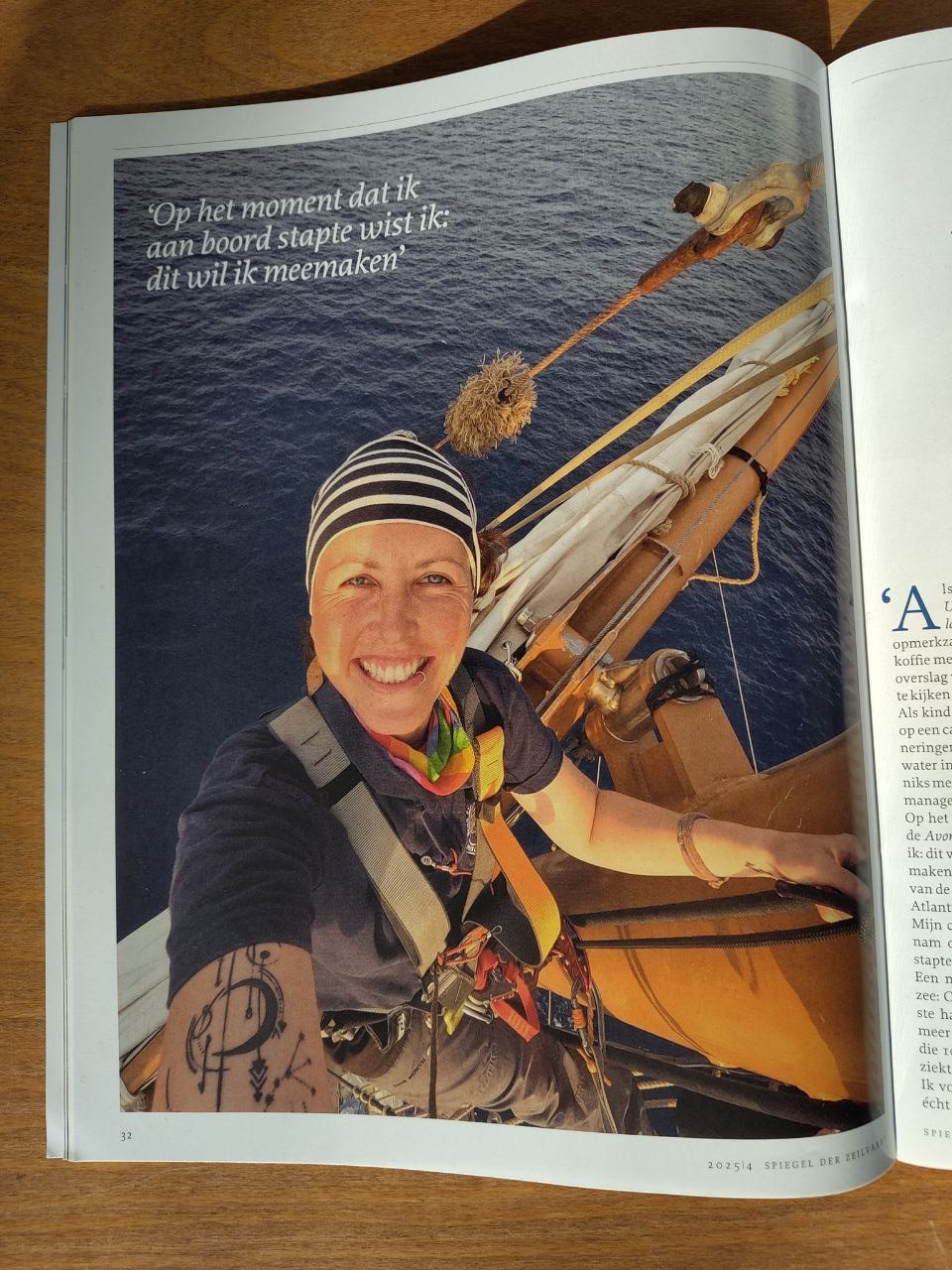
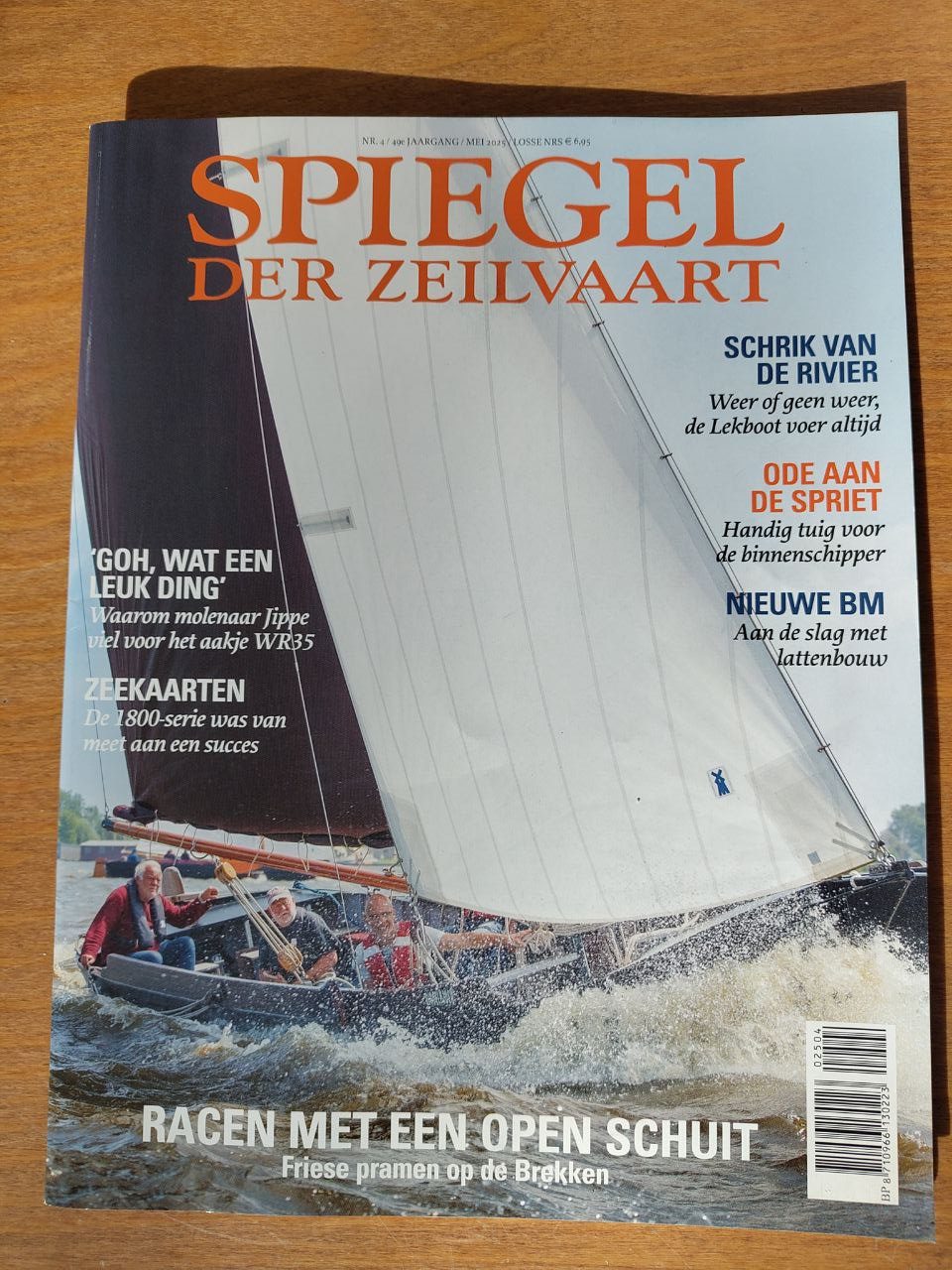
Article at Spiegel der Zeilvaart, May 2025 by Peter Fokkens
To Give you some insights – here is a breef summery of the article
“I have to go to the seas again, to the lonely sea and the sky…” – Sea Fever
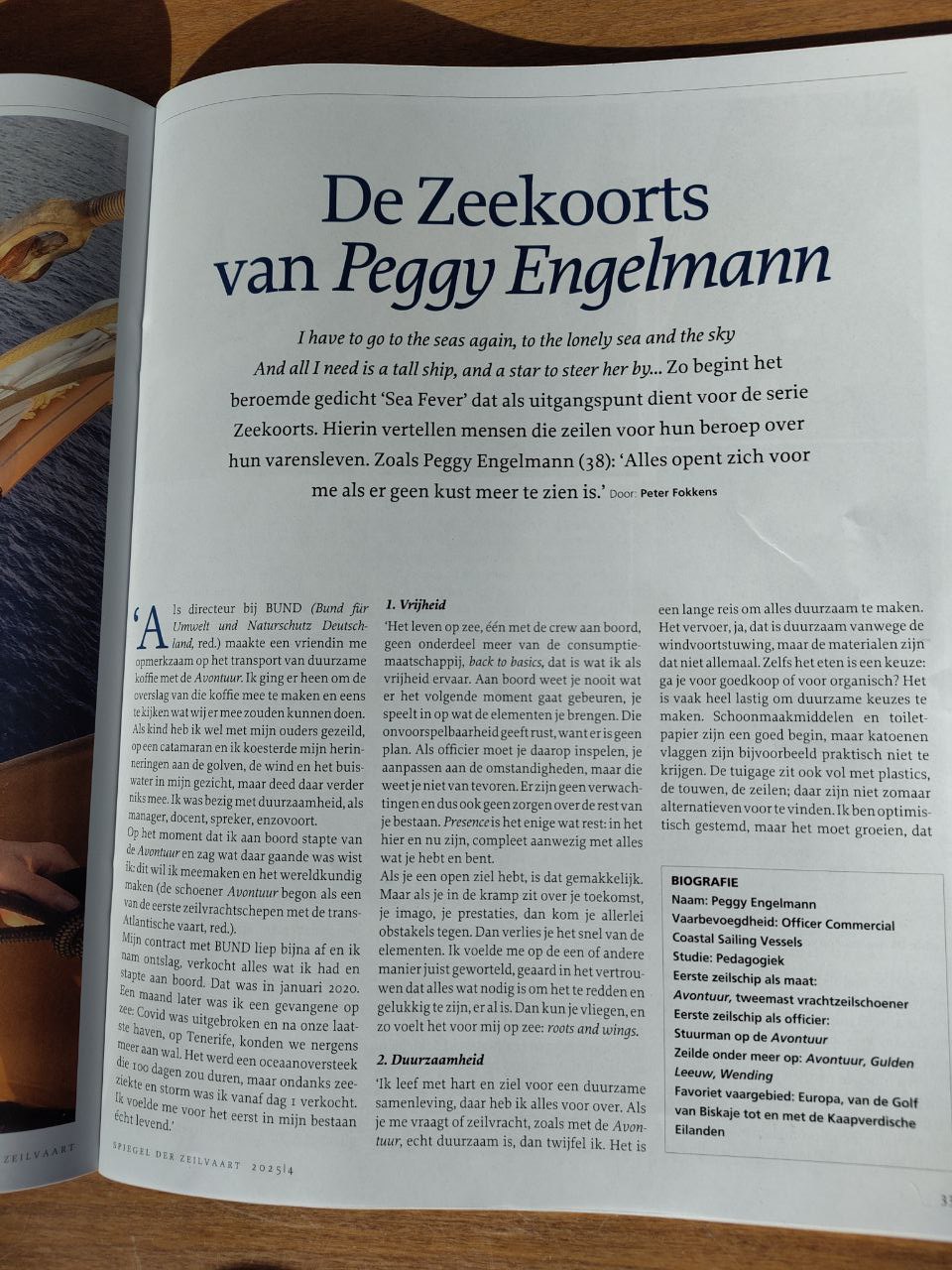
The famous poem Sea Fever opens with words that describe a longing many sailors know well. For Peggy Engelmann, 38, it became reality when she embarked on her first long-term voyage in January 2020 aboard the sailing cargo ship Avontuur.
Answering the Call of the Ocean
A friend at BUND e.V. (Germany’s Environmental and Nature Conservation Federation) introduced Peggy to the transport of sustainable coffee aboard the Avontuur. Drawn by her childhood memories of sailing with her parents, she knew this was an opportunity she had to seize.
“Everything opens up for me when there is no coast to be seen anymore,” Peggy says.
She sold her belongings, resigned from her job, and stepped aboard – just as Covid-19 turned the world upside down. Their final port, Tenerife, closed to visitors, and what was supposed to be a routine voyage became a 100-day ocean crossing. Despite seasickness and storms, Peggy felt, for the first time, fully alive.

1. Freedom at Sea
Life aboard the ship is unpredictable. As an officer, Peggy learned to anticipate and adapt – but could never predict what the elements would bring.
“Presence is the only thing left: being in the here and now, completely present with everything you have and are.”
Freedom, she explains, is feeling rooted in the essentials while soaring with the waves – an experience that the sea uniquely provides.
2. Sustainability in Practice
Peggy’s passion for sustainability drives her work, though she admits the reality is complex. Wind-powered transport reduces emissions, but ship materials and provisions often remain far from fully sustainable.
“Sustainable shipping is slow work. You help the process along, but immediate results are rare. It’s a long-term commitment.”
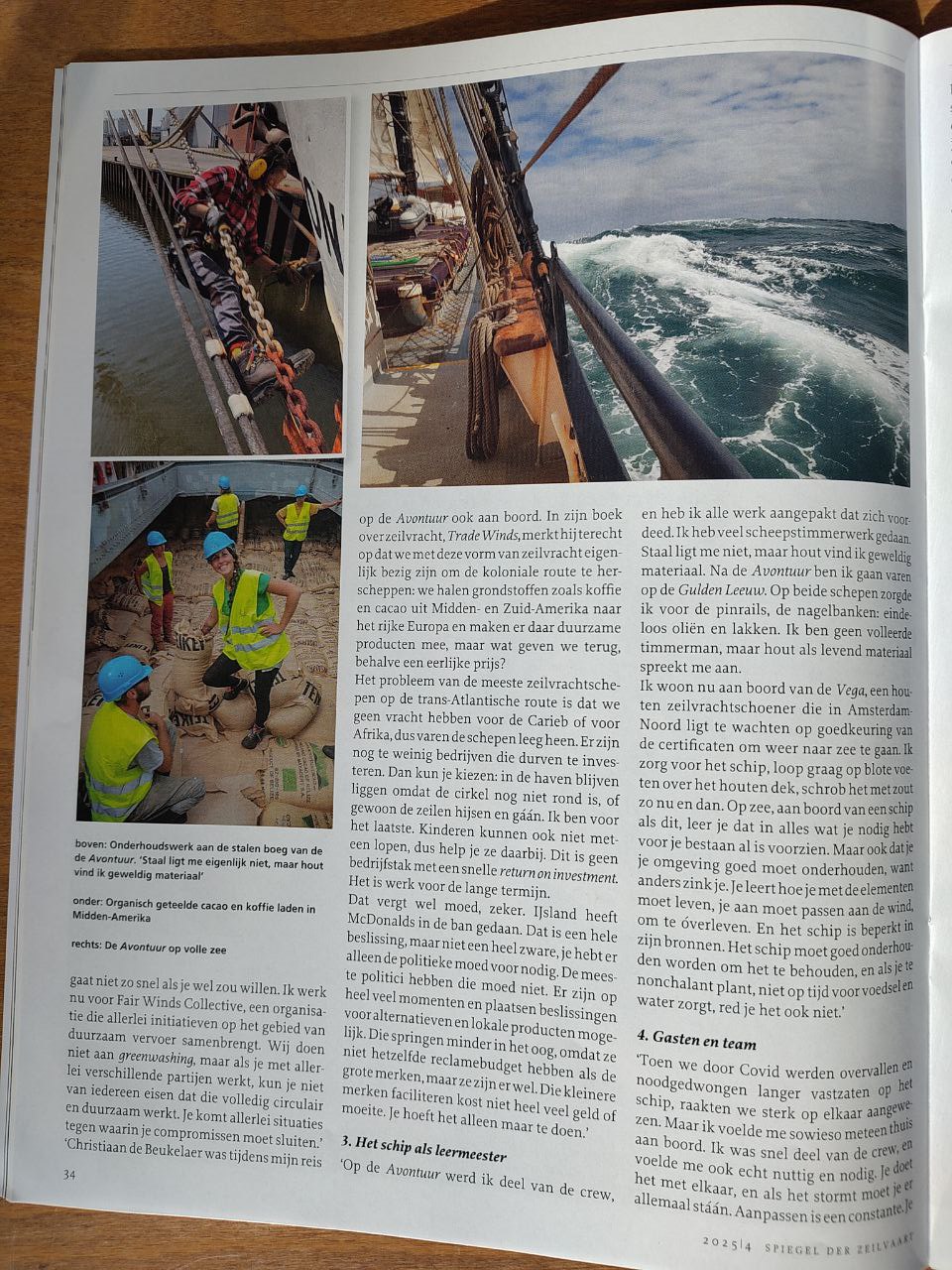
Transporting coffee and cocoa from the Americas to Europe mirrors historic trade routes, raising questions about responsibility and fairness in global shipping.
3. The Ship as Teacher
Onboard, Peggy became part of the crew, tackling carpentry and maintenance tasks despite having no formal training.
“At sea, you learn to live with the elements, adapt to the wind, and maintain what sustains you. Otherwise, you sink.”
This hands-on experience taught her discipline, resourcefulness, and respect for the ship as a living system.
4. Crew and Companionship
Covid confinement deepened the sense of interdependence. Storms, chores, and rationing required constant cooperation.
“You learn not to be reckless with each other’s energy. There’s no unlimited supply.”
Being part of a small, tight-knit team fosters trust, patience, and resilience—lessons that extend far beyond the deck.
5. Following Intuition
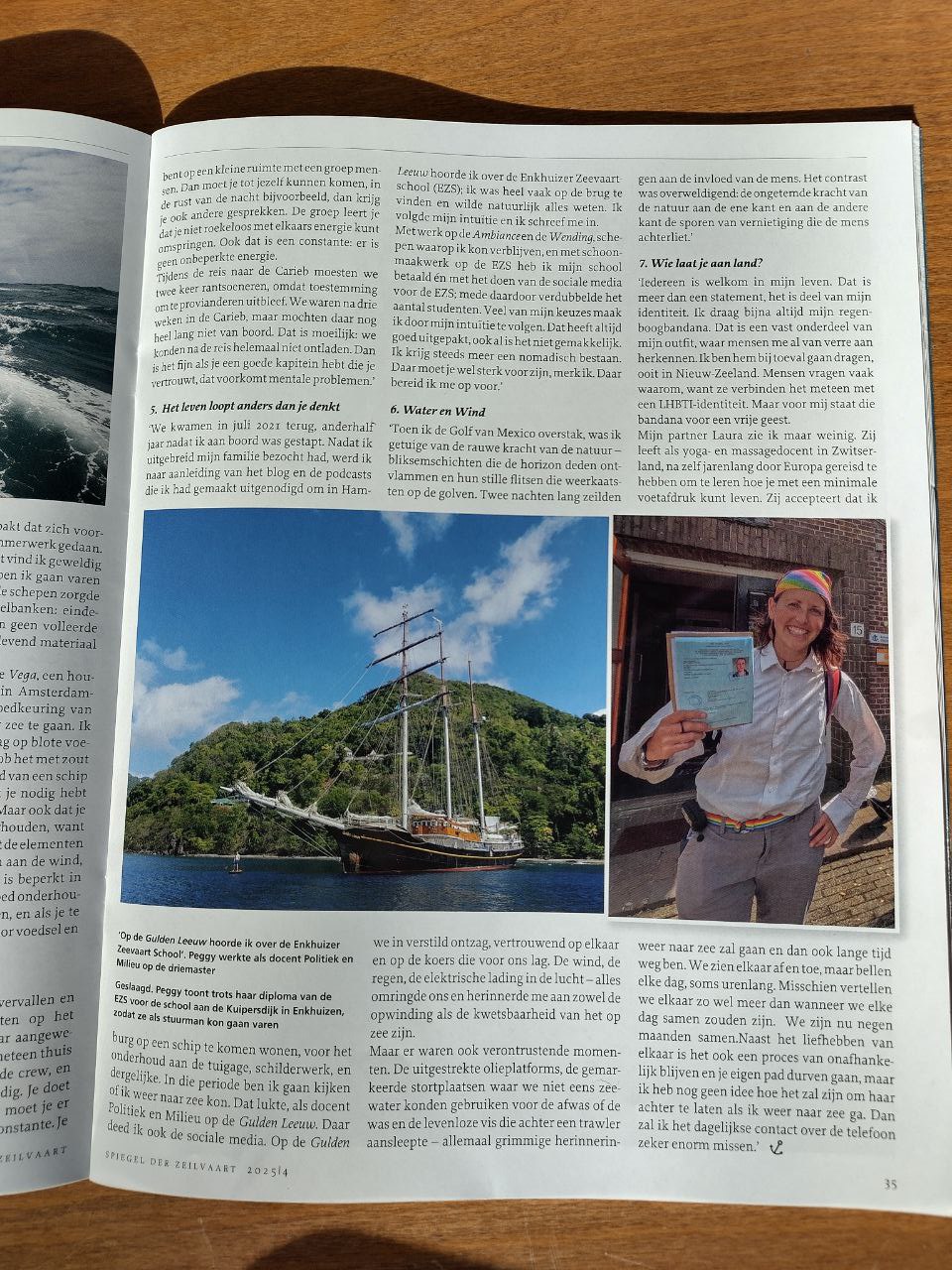
After returning in mid-2021, Peggy pursued maritime education at the Enkhuizer Nautical College, while continuing to work aboard vessels like the Gulden Leeuw. Her decisions are guided by intuition, whether about career moves or life at sea.
“Life rarely goes as planned, but trusting instincts has always worked for me.”
6. Witnessing Nature and Humanity
Crossing the Gulf of Mexico, Peggy observed both the raw power of nature and the human impact on the oceans: lightning, storms, oil platforms, and the aftermath of trawlers.
“The untamed power of nature reminds you of how small we are… and how responsible we must be.”
7. A Life Open to the World
Peggy’s rainbow bandana, a symbol of freedom and inclusivity, reflects her identity as a free spirit. Living at sea means long periods apart from her partner, but daily calls maintain connection and support.
“Love and commitment coexist with a nomadic life at sea. It’s about trust, patience, and presence.”
Conclusion: Life at Sea as a Mirror
Peggy Engelmann’s story exemplifies the allure of the sea: freedom, sustainability, human connection, and the power of intuition. As Sea Fever suggests, the ocean calls, and for her, it will always be answered.
 #PeggyMerkur